Jesu, juva
The Command That Feels Impossible
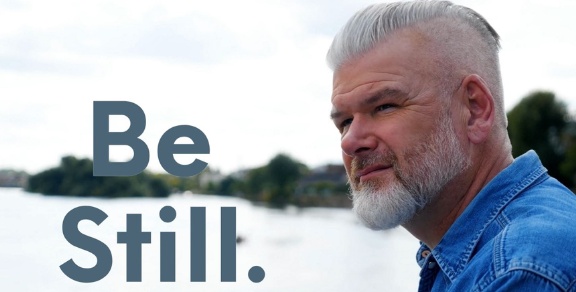
“Be still.”
Two words that feel completely foreign to how most men are wired. We’re built for action. We solve problems. We move, build, fight, fix, and advance. The idea of sitting still while chaos swirls around us goes against every instinct in our bones.
When I first encountered this command in Scripture, my mind went straight to some monk sitting cross-legged on a mountain, emptying his mind and chasing some mystical zen state. That picture made me want to close my Bible and get back to work.
Here’s the relief: that’s not what God is asking of us.
The biblical command to “be still” isn’t about achieving mental blankness or shutting down your brain. Good thing, because if you’re anything like me, your mind operates like a command center with a dozen screens running simultaneously. The second you wake up, you’re already three steps ahead, planning, strategizing, problem-solving.
God knows how He wired you. He’s not asking you to become someone you’re not.
What “Be Still” Actually Means
Look at the context of these familiar verses:
Psalm 37:7 - "Be still and rest in the Lord; wait for Him and patiently lean yourself upon Him; fret not yourself because of him who prospers in his way, because of the man who brings wicked devices to pass."
Psalm 46:10 - "Be still, and know that I am God: I will be exalted among the heathen, I will be exalted in the earth."
This isn’t about meditation techniques. It’s about something far more difficult for men like us: trusting God enough to stop trying to control everything.
“Be still” means this: Stop racing ahead of God. Stop manufacturing solutions in your own strength. Stop trusting your ability to handle everything yourself.
The world throws challenges at you constantly. Your nature drives you to immediately start running scenarios, calculating options, preparing contingency plans. Your mind shifts into tactical mode, analyzing every angle. Meanwhile, the Holy Spirit inside you is trying to get your attention, basically saying, “Stand down for a second. Let Me work.”
The Battle Inside Your Head
I’ve felt it countless times. That restless churning when a problem hits. The immediate impulse to act, decide, fix, control. And in those moments, if I’m paying attention, I can sense the Spirit speaking into that chaos:
“Stop. Don’t make that call yet. Don’t send that text. Don’t make that decision. Still your mind. Trust Me. Pray. Keep trusting. Wait until you sense My direction. Then move.”
The Holy Spirit doesn’t shout. He doesn’t compete with your racing thoughts. His voice is still and quiet, which means you have to get still enough to hear it.
This is warfare, brothers. The enemy loves it when you operate purely on emotion and impulse. He wants you reacting instead of responding. He wants you making decisions from a place of fear, anger, or desperation instead of from a place of faith and divine guidance.
Small Skirmishes and Full-Scale Storms
Some challenges are minor. Daily frustrations. Small setbacks. Those are your skirmishes.
Then there are the storms. The wrecking ball moments that hit your life with devastating force and threaten to destroy everything you’ve built. Maybe it’s a health crisis. A financial collapse. A relationship imploding. A betrayal you didn’t see coming.
In those moments, your emotions spike. Your mind goes into full combat mode, trying to figure out the next move, the escape route, the solution. You can probably remember specific storms in your life right now. Maybe you’re standing in the middle of one today.
Here’s what Jesus demonstrated:
Mark 4:39 - "Then He arose and rebuked the wind, and said to the sea, 'Peace, be still!' And the wind ceased and there was a great calm."
Jesus spoke to the storm with authority, and it obeyed. Not because He panicked and scrambled for solutions, but because He operated from a place of complete trust in His Father’s sovereignty.
The storms in your life aren’t random. They’re not accidents. They come with opportunities packaged inside them, but only for men who understand how to “be still” in the middle of the chaos.
The Discipline of Stillness
This is a learned skill. You don’t master it overnight. It’s forged through experience, through choosing again and again to put your emotions in check and place your full trust in God instead of your own abilities.
Every storm you face is a teacher if you’re willing to learn. The question is: will you grow through it or just go through it?
Being still doesn’t mean being passive. It means being spiritually alert while physically restrained. It means having the strength to hold your position instead of charging ahead without orders from your Commander.
Think about it in military terms. A soldier who breaks formation and charges ahead alone gets himself killed and endangers his unit. The disciplined warrior waits for the command, holds his position, and moves when ordered. That’s strength under control. That’s being still.
The Missing Element in Your Prayer Life
Most of us treat prayer like a briefing. We show up, give God our situation report, list our requests, and then immediately get back to executing our own plans. We talk at God instead of with Him.
Here’s the uncomfortable truth: when was the last time you actually paused in prayer and just listened?
Real prayer includes stillness. It includes moments where you stop talking, stop listing your needs, stop trying to convince God of your perspective, and you simply wait in His presence. You ask the Holy Spirit to make Himself real to you. You invite Him to lead you into God’s holy presence.
You can start a prayer time with zero sense of God’s presence and end it with a profound awareness of His nearness. But that requires you to be still long enough for Him to meet you there.
This isn’t mysticism. This is biblical relationship with a living God who wants to speak to His sons.
The Practice
Here’s how to start:
In daily challenges: When something hits, pause before you react. Take sixty seconds. Pray. Ask God for wisdom. Wait for peace or clarity before you move.
In the storms: When life comes at you hard, resist the impulse to immediately start fixing everything. Get alone with God first. Pour out your heart, then get quiet. Let the Holy Spirit work.
In prayer: Start building in moments of silence. After you’ve prayed, sit still for two minutes. Just listen. Pay attention to what rises in your heart and mind.
In decision making: Before major decisions, practice extended stillness. Don’t rush. God isn’t on your timeline. Wait until you have clarity and peace.
A Word from a Warrior Who Knew
Charles Spurgeon, a man who battled depression, health crises, and constant spiritual warfare, wrote this:
“O let my trembling soul be still, And wait thy wise, thy holy will! I cannot, Lord, thy purpose see, Yet all is well since ruled by thee.”
Spurgeon understood something critical: being still isn’t about seeing the whole plan. It’s about trusting the One who does.
The Challenge
This will be one of the hardest disciplines you develop as a man of God. Your nature fights it. Culture mocks it. Your circumstances seem to demand immediate action.
But the most powerful men in Scripture were the ones who learned to be still before God. Moses at the Red Sea. David facing Goliath. Nehemiah before the king. Jesus in Gethsemane.
They didn’t operate from panic or presumption. They operated from a place of stillness before God, which gave them supernatural clarity and courage when it was time to move.
Be still.
Not passive. Not weak. Not indecisive.
Still before God. Trusting in His sovereignty. Waiting for His direction.
Then, when He speaks, move with complete confidence and devastating effectiveness.
That’s the kind of man the Kingdom needs.
Be that man.
Blane
SDG
Leave a Reply